Every answer starts with a traceable evidence object.
Authenticated uploads move through checksum, role, size, MIME, storage, extraction, chunking, and provenance controls before becoming retrievable evidence.
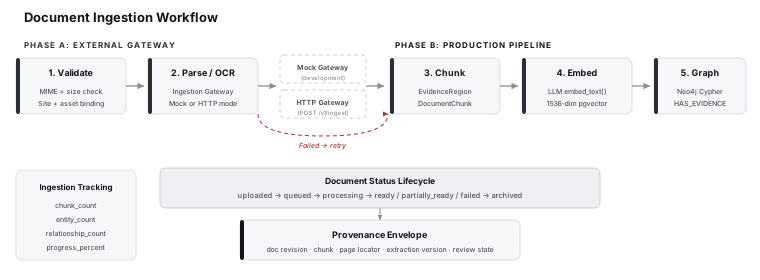
Guarded upload sequence
The browser calculates SHA-256, requests a site-scoped upload session through the Next.js server proxy, uploads to an expiring presigned URL, and confirms the object. The backend rechecks size and content type, records audit context, extracts readable content, and persists evidence regions and overlapping chunks.
Truth boundaries
Public demo documents are synthetic and read-only. Authenticated workspace documents are listed from the backend and processed from the uploaded object.
Embeddings and graph enrichment are best-effort. A document is not described as vector-indexed or graph-enriched unless those stages complete.
Source locators, tenant, site, document revision, checksum, MIME type, and timestamps remain attached to persisted evidence.